 The Autism Navigator
THE AUTISM NAVIGATOR · WORKBOOKS · MENTORING
The key to good autistic mental healthis understanding it.
Not more coping, and not trying harder. Knowing how you are built, so that what happens to you stops being a mystery you blame yourself for.
Practical workbooks and specialist support for autistic teenagers, adults and their families. Not generic mental health advice with the word autism added - built on how autistic people actually work, by people who do this for a living. Autism plus environment equals outcome: change the conditions and the same person gets a different life.
Start here
Start your journey here.
Choose whichever is closest to where you are today - you do not have to have it worked out before you get in touch. That is our job.
For parents
My child has just been diagnosed, or we are still waiting
You are the one holding the paperwork, the school emails and the questions nobody has answered.
See the Navigator →For autistic adults and teens
I want to understand myself and where I am going
Identity, confidence, and working out what you actually want next - on your own terms.
See the Navigator →For work
Work is the part that is hard
Interviews, sensory load, managers, adjustments. Usually funded by a government grant, not by you.
See Access to Work →The Autism Navigator
The only complete mental health programme built for the autistic mind - understanding, skills and real-world solutions in one place.
Autistic mental health does not present the way non-autistic mental health does. Autistic anxiety is driven by sensory differences, communication differences, intolerance of uncertainty and disruptive change to routine - not by irrational thinking. Autistic depression can look like shutdown rather than sadness. Autistic burnout is not stress a holiday fixes. Advice written for a non-autistic brain - push through it, challenge the thought, get out more - frequently makes an autistic person worse, and then they are told they did not try hard enough.
We built the Navigator the other way round. Every explanation, skill and prompt starts from how an autistic nervous system actually works. Nobody else offers this - not as awareness training, not as a diagnosis explainer, not as generic CBT worksheets handed to an autistic person and hoped for the best.
Watch it work · one minute
Rather read? Everything in the video is written out below.
The compass finds where support actually needs to go, a module explains how that part of you works, a skill gives you something to do about it, and all of it gathers into one toolkit you can print and hand over.
14
modules on how autism actually works
17
CBT and DBT skills, adapted not borrowed
8
chapters on real life - study, work rights, money, illness, hard days
2
editions - adults, and age 11 up
What you are actually buying
A toolkit for life, not a course you finish and forget about.
You read it, tap through it and write in it, and everything you write gathers into one place you own - your toolkit. Come back and change it whenever life changes shape.
That is the bit that matters later. When someone asks what you need - a doctor, a manager, a tutor - it is already written down, in your words, from a day when you had the capacity to write it.
Every skill also prints as a pocket card - the steps only, no reading - so the ones you use most can be in a bag or on a wall rather than on a screen you have to unlock.
Come back any time and change it. A new job, a diagnosis, a move, a burnout. Nothing you wrote before was wrong - it was where you were.
Nothing has gone wrong and you are already tired. That is what processing everything, all day, costs.
Tap a section to open it. Read it, or have it read aloud - one piece at a time, at your speed.
Annual reviews and EHCPs
Take it straight into the review meeting
Every annual review, EHCP meeting or transition meeting asks the same questions - what are their needs, what helps, what has been tried, what has changed. Most families answer from memory, the night before, and lose things that mattered. The Navigator has the answers already written down, in the person's own words.
Less paperwork, less guesswork
Print the toolkit and hand it over. Needs, triggers, what helps and what does not - stated once, properly, instead of reconstructed under pressure.
The young person's own voice
Reviews are supposed to include their views and rarely manage it. This is their words, written calmly in advance rather than asked for across a table of adults.
It rolls year to year
Come back before each review, change what is no longer true, and print it again. Over time you are holding a documented history rather than starting from nothing.
Nothing is shared automatically. The person decides what to record.
Why generic support keeps failing
Mental ill health looks different in autistic people. We build for that.
Anxiety, depression and burnout do not present in autistic people the way the textbooks describe - so they get missed, misread, or treated with something designed for a different nervous system. That is the reason so many autistic people have been through services and come out no better.
Anxiety often looks like control
Not worry described out loud, but repeated questions, rigid routines, refusal to leave the house - and a body that has been on alert since breakfast.
Depression often looks flat, not sad
Less interest in the thing they love, less speech, more time alone. Asked how they feel, many autistic people genuinely cannot say - which is interoception, not evasion.
Burnout gets mistaken for regression
Skills that were there stop working, and rest does not restore them. Treated as laziness or decline, it gets worse. Treated as burnout, it lifts.
Distress arrives as behaviour
Meltdown, shutdown, or an inability to get through the school gate. It gets recorded as conduct and responded to with consequences, when it was a nervous system out of capacity.
Masking hides all of it
Someone can hold it together through an assessment and fall apart at home. "They seem fine" is often the reason no support arrives.
And the standard advice can harm
Push through the discomfort. Make eye contact. Have a warm bath. Given to an autistic person unchanged, this advice reliably makes things worse - and most of it is still being given.
This is why the Navigator is not general mental health material with autism written on the cover. Everything in it was built from how autistic distress actually presents - by the people who experience it and work with it every week.
What makes it different
It takes positions. Most autism material does not.
Generic mental health advice handed to an autistic person often makes things worse. Everything here is built on specific arguments about how autistic people actually work - the same arguments we use in practice.
Autism + environment = outcome
Autism is not the problem to be fixed. Change the environment and the same person produces a different outcome - which is why we look at the room before we look at the effort.
Demand avoidance is not defiance
It is an extreme freeze response to losing control - which is why instructions and consequences make it worse, and handing autonomy back is what works.
CBT and DBT, adapted
All of our skills are adapted by specialists for the autistic user. Ours starts from your own sensory profile instead.
It is not the change, it is the prediction
People cope with change they can see coming. What costs them is losing the picture of what happens next - so warning in advance is not a kindness, it is the adjustment.
Masking is a health issue
It is the most commonly reported route into autistic burnout. We treat the cost as real and cumulative rather than telling anyone to try harder at fitting in.
Nobody marks it
No score, no dashboard, no report to a parent, school or employer. What a person writes is theirs, and that is what makes them honest in it.
Accreditation and review
Reviewed by autistic readers
Every module and skill is read and challenged by autistic adults and young people before it is published. Their names are credited in the programme.
Tried and tested in schools
This is not theory written at a desk. The programme was delivered in a secondary school, with autistic students, before it became a product - and it was rewritten around what actually worked in that room.
Written by specialists
Twenty years of autism specialist practice, a former SENCO, and CBT and DBT tools adapted for autistic thinking rather than borrowed unchanged.
Independent approval - in progress
We are seeking National Autistic Society Product Approval and CPD certification for the workplace edition. We will show the marks here when they are granted, and not before.
Workbooks
Nobody struggles with everything. Autistic profiles are spiky.
Real strength in one area sitting next to genuine difficulty in another, often on the same afternoon. So pick the one thing that is hardest right now and work on that - a single workbook on communication, executive function, sensory load, stress, school or independence, rather than a general course about autism.
Which one do I need?
The Navigator is the all-round skills package - understanding, seventeen skills, and the real-life chapters, across everything. A workbook goes deep into one area on its own.
You do not need both. Start with the Navigator if you want the whole picture, or start with a workbook if one thing is dominating your life right now. People often do a workbook first and the Navigator later, or the other way round.
Not on sale yet. Tell us which one you need and we will let you know when it is ready.
Web book and printable PDF when each one is released. Nothing to pay today.
Choose your direction
Which workbook do you need?
Tap a point on the compass and it will tell you which focus-area workbook answers where you are today. Each one is a separate piece of work for one specific problem - not a section of the Navigator.
N · Getting a Diagnosis
I need answers
This one is written and in final checks. We are releasing in two waves so each workbook gets the attention it needs - this wave is the parent workbooks, next month is the rest.
· Getting a Diagnosis
One focus area at a time
FOCUS ON WHAT MATTERS · COMING NEXT
-
Next month Notify me
-
Next month Notify me
-
Next month Notify me
-
Next month Notify me
-
Coming soon Notify me
-
Next month Notify me
Exam Access Arrangements
Your child will sit exams. Without the right arrangements they will be assessed on how well they cope with an exam hall, not on what they know.
Extra time, rest breaks, a separate room, a reader, a scribe, word processing, prompts. Most parents do not know what can be asked for, what the school has to evidence, or that the evidence has to be built up long before anyone applies. By the time it is obvious, the deadline has usually gone.
What can be asked for
Every arrangement explained plainly, and which ones actually suit an autistic candidate.
The normal way of working
The single thing applications are refused on - and a grid to build it, year by year.
The deadlines that matter
When to start, when to ask, and what happens if you leave it until the exam year.
The words to use
What to write to the SENCO, what to ask in the meeting, and what to do with a no.
Written by Graeme - autism and SEND specialist, former SENCO and lead of an autism provision, with years of access arrangements experience. He knows exactly what a school needs to see, because he used to be the person receiving it.
Pay later options are provided by third-party payment providers at checkout and are subject to their terms and eligibility checks. Some pay later agreements are not regulated by the Financial Conduct Authority. Borrowing more than you can afford or paying late may negatively impact your financial status and ability to obtain credit. 18+, UK residents only. Subject to status.
FREE DOWNLOAD · NO PAYMENT,
14 things you can ask your school for without an EHCP
One page, written by a SENCO. The list schools do not hand out. Read it here now, or ask us and we will email the printable version.
Two fast ways in
You do not have to buy a package to start.
Take one workbook today, or book one session and see how it goes. No commitment either way.
Coming next
A workbook, today
Printable PDF, when each one is released. Plain language, work at your own pace. No calls, no camera, no waiting list.
The programme
How mentoring works, step by step.
Whatever we are working on, every mentoring block follows the same four steps. That is deliberate: the same shape every time means no surprises for the person being supported, and a clear record for whoever is paying for it.
Contact us firstStep 1
Find out where you are now
Before anything else: their own account of how things are, a form for a parent or carer if there is one, and a first session spent listening rather than working.
Step 2
Agree what we are working on
A written plan naming the skills, the order we will do them in, and what a good outcome would look like - so progress is something you can check rather than hope for.
Step 3
Practise it in real situations
Each session teaches one or two skills explicitly, then rehearses it in unscripted, real-life scenarios - so it survives a day that does not go to plan.
Step 4
Report back, and check what changed
A written report within 48 hours of every session: what we worked on, where things stand, and what to try at home before the next one.
The world of work
Getting a job is one thing. Staying in it is another.
Autistic people are underemployed for reasons that have very little to do with capability.
There are two ways to get this support, and you can take either one on its own or both together. In the UK, Access to Work can fund both.
Route one · self-directed
The Autism Navigator, at work
The employee works through the programme themselves, at their own pace, with nothing to schedule. Bought by the employer for one person or for a whole team - and every purchase includes the Manager Edition, so the line manager knows what to change on Monday.
- →Understanding, 17 skills and the real-life chapters, including work
- →A written adjustments record the employee owns and keeps when their manager changes
- →Nothing the employee writes is ever visible to the employer
- →No diary, no waiting list, no disclosure to a room of colleagues
Route two · with a specialist
1:1 workplace mentoring
Sixty-minute online sessions with an autism specialist, built around the employee's actual job. Autism understanding plus CBT and DBT skills, taught for work and rehearsed against real situations.
- →Sensory audit of the real workplace, and what can be changed
- →Disclosure, exact wording, and adjustments put as a business case
- →Interviews, reviews and difficult conversations rehearsed
- →We can provide specialist reports for employers, line managers and HR
Access to Work can fund either route, or both - the programme as a support tool and the mentoring hours alongside it. Employers can also simply buy the programme outright without going near the scheme.
Access to Work · Autism mentoring for adults
Fully funded, in most cases, by an Access to Work grant.
Access to Work is a grant from the Department for Work and Pensions. It pays for support workers, job coaching and workplace mentoring - which is exactly what this is. The grant is not a loan, is not means-tested, is not repaid, and does not affect your other benefits.
You apply, not your employer. You do not need their permission, and you do not need a formal diagnosis - what matters is how autism affects your working day. You can apply if you are 16 or over and employed, self-employed, on an apprenticeship, or holding a confirmed job offer. Northern Ireland runs its own version of the scheme.
The programme
Sessions of 60 minutes, online, 1:1. Your award decides how many. We write the programme to fit it, and we do not ask you to buy a fixed box of five.
What the sessions work on
Autism understanding, plus CBT and DBT skills, taught for work.
Three layers, chosen with you in the first session and written down. Each session teaches a named skill, then rehearses it against a real situation from your job.
Layer one
Autism understanding
Knowing how your own autism shows up at work, so you can plan around it instead of being surprised by it.
- →Your energy, your masking, and what a working day actually costs you
- →Sensory audit of your real workplace, and what can be changed
- →Where communication breaks down, and why it is not a fault
- →Working out what you need before anyone asks you for it
Layer two
CBT skills
Cognitive behavioural skills, adapted for autistic thinking, for the thoughts that stop you working.
- →Checking what a manager actually meant instead of assuming the worst
- →Handling feedback and criticism without it taking the week
- →Reducing anxiety before meetings, interviews and reviews
- →Breaking a task down to the point where starting is possible
Layer three
DBT skills
Dialectical behaviour therapy skills - including FAST, trust and boundaries - for the moments the working day overwhelms you.
- →Getting through a shift you cannot leave, without shutting down
- →Regulating after an overload, and shortening the recovery
- →Saying no, asking clearly, and holding a boundary at work
- →Coping with sudden change to a plan you had already made
Practical work sits across all three: disclosure and the exact wording, asking for adjustments as a business case, and interviews rehearsed unscripted.
How it runs, start to finish
A short call, free
Twenty minutes to check this is the right support. No sales, and no obligation.
You apply
On GOV.UK or by phone. We send you the links, the wording that works, and a checklist of what to have ready.
Your assessment
A conversation about what is hard at work, not a test of your autism. We send you our written support plan and itemised quote to hand over.
Your award
If mentoring is approved, the letter sets out your hours and funding. We size the programme to it.
We start
Sessions online, at times that fit your energy rather than the diary. With your permission we brief your manager or HR so the adjustments actually happen.
Review
A written summary of what changed, what to keep doing, and what to ask for at renewal.
We are the provider, not the decision maker. Access to Work decides your eligibility and your hours - we cannot promise either. We give you a clear scope and quote so the application is easy, and apply early: waits are long.
What the people we work with say
Reviews from autistic students and adults we have mentored, most of it funded through Disabled Students' Allowance. Collected independently - first names only, published with their permission.
In three years of uni, Graeme is by far the best study skills tutor I have had. He adapted to my way of learning so quickly, and he has shown me tools that help my academic work and my daily life.
I was nervous about returning to school after a long gap, but my mentor Heather has been so understanding. Knowing I have someone championing me has made such a difference to my enthusiasm to work.
The support has been tailored to my course and to my needs as an autistic and ADHD adult. They help me understand all the things I dare not ask about in other public educational situations.
Having someone incredibly patient, and very knowledgeable about supporting neurodiverse people in education, has made accessing uni a lot less stressful.
This has been my best support so far - he understands my needs. My sessions happen at the weekend or in the evening, sometimes the same day if I need to talk. I wish I had this support earlier in my course.
Heather understood why at first I would never use my camera, and let me get used to our sessions. Now I feel comfortable enough to do so.
When I am in a pickle, she is always there to help me resolve it. She has taught me a lot about my autism diagnosis, and I am extremely grateful.
We are practising exactly what I am lacking - communicating in written and spoken form - and you show me how to use the software and the library. I would certainly recommend you to a friend.
Alongside the programme
1:1 mentoring with an autism specialist
Some people want a person alongside the programme - to work through it together, to prepare for a meeting, or to think out loud with someone who does not need autism explained to them. Mentoring is available in four directions, priced per case. Places are limited, so tell us what you are facing and we will say honestly whether we can help and what it would cost.
Getting a Diagnosis
Nothing is confirmed yet - what autism is, what to record, and how a referral actually succeeds.
School Years
Adjustments, an EHCP meeting, or a placement that is not working - evidence, wording and a plan.
Identity
Who you are underneath the coping - masking, shutdowns, and what is actually yours.
Goals and Dreams
The life you actually want - named, then worked backwards into steps that hold.
Each direction has its own workbook, which you can also buy on its own and work through at your own pace - see the workbooks above. Every mentoring enquiry starts with a free orientation call.
In their words
What changed for the people we worked with.
Shared with permission. Names shortened at their request.
[Replace with a real parent quote - ideally about what was different after the sessions, not about how nice we are.]
[Replace with a real quote from an autistic young person or adult - in their own words, uncorrected.]
[Replace with a real quote about work or Access to Work - what they can now do that they could not before.]
Note for Heather: these three quotes are placeholders - nothing here is invented or attributed to a real person. Replace each one with a genuine quote you have written permission to publish, then delete this box. If you have none yet, ask your last three families a single question: “what can you or your child do now that you could not do before?”
Who we are
We only do autism.
That is the whole point.
Autism is the specialism here, not a module inside a broader offer - studied at postgraduate level and practised for two decades. That depth is why the questions in these workbooks land differently.
Lead specialism
PGCert in Autism Studies
Career long continuous learning including Postgraduate autism qualifications are the academic grounding behind every direction, workbook and session.
20+ years
Specialists of autism in practice.
DfE approved
Autism specialist provider of non-medical help for DSA students.
Evidence-based
Current autism research, not legacy deficit models.
Lived experience
Lived experience alongside professional expertise is at the heart of everything we do.
Qualified professionals
A team of professionals including qualified teachers with SENCO and classroom experience.
Safe and insured
Enhanced DBS checked, safeguarding trained, professional indemnity insured, ICO registered.
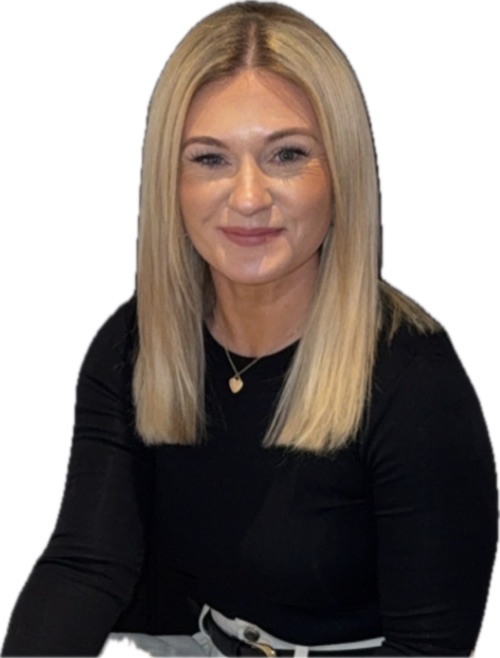
Heather
Founder · PGCert Autism Studies
Creator of the Navigator programme, Heather is an autism specialist with over twenty years’ experience and a PGCert in Autism and SEND. Committed to continuous academic study, she specialises in autism understanding and supporting autistic students to overcome barriers to learning and discover value in their education. Through carefully woven autism-specific CBT and DBT skills, she helps students build confidence, understand themselves and develop practical strategies to achieve their goals and lead positive, fulfilling lives.

Graeme
SENCO · Autism specialist teacher
A highly experienced autism and SEND specialist, former SENCO and lead of an autism provision, with a PGCert in Autism and SEND. Graeme brings together a rare combination of professional expertise, leadership experience and first-hand knowledge of how education systems work. From understanding your child’s needs and navigating SEND processes to study skills, exam access arrangements, reasonable adjustments and securing the right support, he provides parents with a single, knowledgeable point of contact - helping you understand what your child needs, what you can ask for and how to move things forward.
The wider team
Matched, not allocated
Mentors drawn from mental health services, teaching, apprenticeships, higher education, employment support and coaching, many bringing lived experience of neurodiversity. Nobody gets the next available person: we match on goals, interests and support needs.
Common questions
Who is this for?
Autistic people who want to make sense of their diagnosis, understand how autism actually impacts them day to day, build a positive sense of who they are, and get on with achieving what they want in life. Whether the diagnosis came last month or twenty years ago, and whether you are fifteen or fifty. Parents and carers are welcome too - the school and diagnosis directions are written for you - but the person at the centre of all of this is the autistic person.
How do I get it, and do I get updates?
Your links arrive by email straight after payment. Each workbook is a web book you open in your browser - on a phone, tablet or computer - plus a printable version.
Updates are included. You are buying the workbook, not a version of it. When we add a part, improve an explanation or add a new video, it appears in the copy you already own, at no extra cost - and nothing you have written is affected.
One practical thing: everything you write is saved on the device you write it on, not on our servers - that is what keeps it private. So use the same device and browser each time, and avoid clearing your browsing data for this site, or your writing will go with it. If you want a copy that cannot be lost, use the print button in your pack.
I want this but cannot afford it. What are my options?
Options are available! Where a young person has an EHCP, workbooks can be purchased and mentoring of this kind can sometimes be funded through it, or through a personal budget or direct payments attached to it. In work, the Access to Work scheme can fund job coaching and workplace mentoring, and you apply for it yourself. Some families use a local authority personal budget, a charitable grant, or a school's own SEN funding.
In higher education, Disabled Students' Allowance funds specialist mentoring and study skills tutors, and we are a DfE-approved provider of that support - please fill in the contact us form for info on university support.
We can provide an itemised quote for any of these applications.
Payments for mentoring or workbooks can be spread out.
Is there anything on paper, or is it all on a screen?
Both. Your toolkit prints - everything you have written, in your words, ready to hand to a GP, a manager or a tutor. And every skill also prints as a pocket card: the steps only, no reading, small enough for a bag, a wallet or a wall. On a bad day a card in your pocket beats a book you have to open.
Do I need a diagnosis to start?
No. Plenty of people start while waiting for an assessment, or without ever seeking one. The Navigator is educational support, not a diagnostic service - we work with the person in front of us.
Can I buy one direction rather than the whole programme?
Yes - that is the point of the compass. Each direction is complete on its own, and if you later move to the full programme, what you have already paid comes off the price.
Are sessions online or in person?
Online by video call, so you stay in your own room and we can work with you anywhere. In-person sessions are available in selected UK regions on request.
What if I am not sure which direction I need?
Most people are not, and you do not have to work it out on your own. Tell us what is going on in the contact form and we will say which direction we would start with - or turn the compass above and read the four descriptions, since the one that makes you wince is usually the answer. Nothing is locked in either: if a direction turns out to be the wrong fit once we start, we change it.
What if I struggle to talk, or run out of words mid-session?
Then we do not rely on talking. Camera off, chat instead of speech, written questions in advance, shorter sessions, silences left alone. Say what works and it is set up that way from the start.
Can I do this without anyone else being involved?
Yes. Sessions are yours and no one else needs to be there. If you are under 16, a parent or carer must be present at the beginning and end of each session - the middle is still yours. As with any support service, anything that raises a safeguarding concern is passed to the appropriate person.
Is the workbook enough on its own?
For a lot of people, yes. The workbooks contain the same questions and structure as the sessions - what they cannot give you is a second pair of eyes. If you want that later, the workbook price comes off the package.
What if I stop, or need a long gap?
Sessions do not expire and there is no schedule to fall behind. Pause and pick it up when you have the capacity.
Contact us
Tell us where you are.
Buying the Navigator for yourself or one young person? Write "Navigator" below and we will send a payment link and your access the same working day.
Fill this in and it comes straight to our inbox. No phone call required - we will reply in writing, and we will name the direction we would start with whether or not you buy anything.
It is your map.We just help you read it.